
When homeowners worry that an unauthorized person may have a copy of their house key, they often assume every lock must be replaced. In many situations, however, the existing hardware remains secure and functional. The real concern is that an old key can still unlock it.
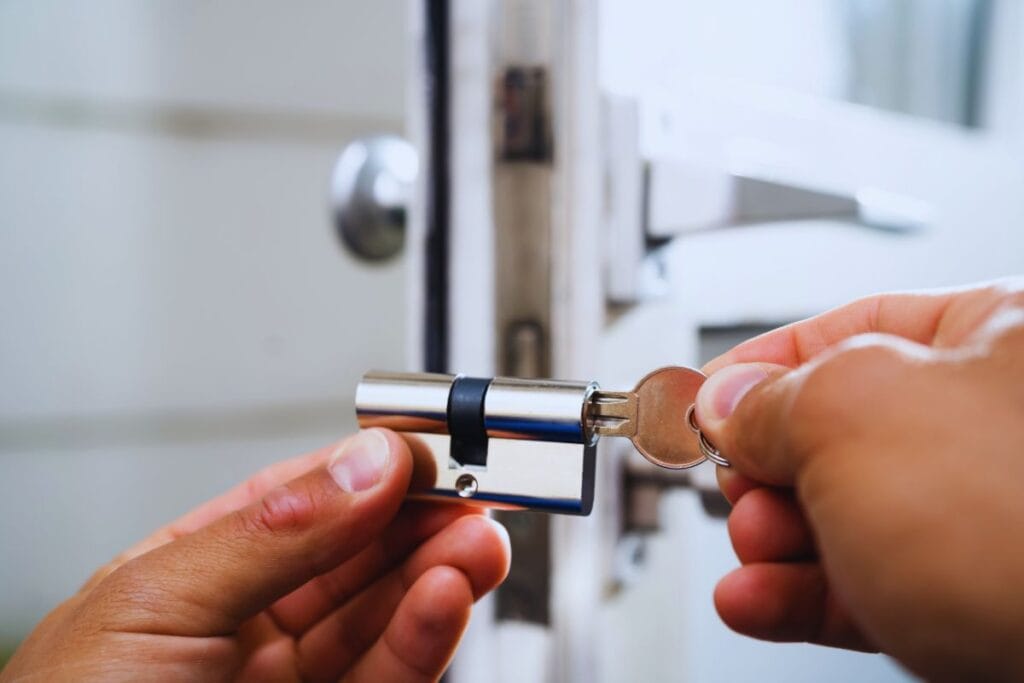
Lock rekeying provides a practical and cost-effective solution. Instead of removing the entire lock, a locksmith changes the internal pin configuration so the old key no longer works. A new key is then created to operate the reconfigured lock.
Bulldog Locksmith provides residential locksmith solutions for homeowners in Irving, Texas. Understanding how rekeying works—and when it is appropriate—can help families improve key control without paying for unnecessary hardware replacement.
What Is Lock Rekeying?
Most traditional pin-tumbler locks contain a cylinder with small internal pins. When the correct key is inserted, the pins align at a specific point, allowing the cylinder to turn and unlock the door.
During lock rekeying, a locksmith:
- Removes or accesses the lock cylinder.
- Disassembles the appropriate components.
- Replaces or rearranges the internal pins.
- Configures the cylinder for a new key.
- Reassembles and reinstalls the lock.
- Tests the new key from both sides of the door.
After rekeying, previously issued keys should no longer operate the lock. The exterior hardware usually remains the same.
Why Rekeying Is Usually More Affordable
The primary reason rekeying costs less is that it allows homeowners to continue using their existing locks. The locksmith changes only the components that determine which key operates the cylinder.
A complete replacement may require:
- Purchasing new lock hardware
- Removing the old lock
- Modifying the door when hardware is incompatible
- Installing the new components
- Aligning the latch, bolt, and strike
- Programming electronic features
- Disposing of the old hardware
With rekeying, homeowners generally avoid the cost of buying multiple new locks. Labor may also be simpler when the existing hardware is compatible, accessible, and in good condition.
The final price still depends on the number of locks, their condition and type, and the number of new keys required.
Rekeying Restores Control Over Your Keys
Homeowners may not always know how many copies of an existing key are in circulation. Previous owners, former tenants, contractors, cleaners, relatives, or neighbors may have received keys at some point.
Even when there is no reason to suspect anyone, uncertainty about key control can create a security concern. Rekeying prevents old keys from operating the affected locks.
This can be especially helpful:
- After purchasing a home
- After a tenant moves out
- When a key is lost or stolen
- After ending a relationship
- When a former employee had access
- After changing cleaning or maintenance providers
- When spare keys cannot be accounted for
Rather than replacing functional hardware, a house lock rekey changes access while preserving the locks already installed.
New Homeowners Should Consider Rekeying
Receiving keys at closing does not guarantee that those are the only copies. Previous owners may have given duplicates to family members, neighbors, real estate professionals, contractors, pet sitters, or service providers.
Rekeying shortly after moving into an Irving home provides a clean start. It ensures that the new household controls the active keys.
This is also a good opportunity to have a locksmith inspect:
- Entry-door deadbolts
- Side and back doors
- Garage entry doors
- Patio doors
- Exterior storage rooms
- Gates
- Mailbox locks, when applicable
- Door and strike alignment
If the existing locks remain in good condition, rekeying may be sufficient. Damaged or inadequate locks should be evaluated for replacement.
Lost Keys Do Not Always Require New Locks
A lost key can create uncertainty, particularly if it disappeared near information identifying the property. However, losing a key does not automatically mean the entire lock must be replaced.
If the hardware is reliable and undamaged, rekeying can invalidate the missing key. New keys are then issued to authorized household members.
Prompt service is especially important if:
- The key was stolen
- It was lost with identification
- The key ring included an address
- A bag containing keys and personal documents disappeared
- You believe someone knows which property the key opens
If the key is simply misplaced inside the home, the urgency may be lower. Nevertheless, rekeying can restore peace of mind when the key cannot be located.
Rekeying Can Allow One Key to Open Multiple Doors
Many homes have separate keys for the front door, back door, garage entry, and other entrances. Carrying several similar keys can be inconvenient.
When compatible locks are installed throughout the property, a locksmith may be able to rekey them to operate with one key. This is often called keying alike.
Using one key can provide:
- A smaller key ring
- Faster access
- Easier key management
- Fewer duplicate keys to organize
- Simpler access for trusted family members
Not all locks can be keyed alike. They must generally have compatible keyways and cylinder designs. A locksmith can inspect the hardware and explain which locks can share a key.
When Rekeying Is the Better Choice
Rekeying is often appropriate when:
- The locks work smoothly
- The hardware provides adequate security
- The key has been lost
- Former occupants may have copies
- You want all compatible doors to use one key
- The locks match the home’s design
- You need to change access without purchasing new hardware
- You recently moved into the property
In these situations, replacing every lock could add cost without providing a meaningful benefit over professionally reconfigured cylinders.
When Lock Replacement Is Necessary
Rekeying changes which key opens a lock, but it does not repair badly damaged or outdated hardware. Replacement may be a better choice when:
- The lock is broken
- The cylinder is severely worn
- The deadbolt does not extend properly
- The hardware has been damaged during a break-in
- The lock is heavily corroded
- Parts are missing
- The lock provides inadequate security
- The homeowner wants keypad or smart-lock features
- The hardware is incompatible with the desired key system
- Repair costs approach the cost of replacement
A locksmith should evaluate the complete door. Sometimes difficulty locking comes from misalignment, loose hinges, or frame movement rather than a defective lock.
Rekeying Versus Lock Replacement
The best option depends on the condition of the hardware and the homeowner’s goals.
| Consideration | Lock rekeying | Lock replacement |
|---|---|---|
| Existing hardware | Usually retained | Removed and replaced |
| Old keys | No longer operate the rekeyed lock | No longer operate the new lock |
| Typical cost | Usually lower | Usually higher |
| Appearance | Generally unchanged | Can be updated |
| Security upgrade | Restores key control | Can upgrade hardware strength and features |
| Damaged lock | Not always appropriate | Often recommended |
| Smart-lock upgrade | Usually not provided | Allows installation of new technology |
| Keying alike | Possible with compatible locks | Possible with selected compatible hardware |
A professional assessment can determine which option provides the best value.
Rekeying Can Be Part of a Broader Home-Security Plan
Although lock rekeying improves key control, it is only one part of home security. Homeowners should also inspect the physical condition of their doors, frames, hinges, and strike plates.
A residential security review may identify:
- Loose strike plates
- Short or missing screws
- Doors that do not latch completely
- Weak or damaged frames
- Worn deadbolts
- Unsecured secondary entrances
- Windows near reachable lock hardware
- Gates or storage areas using outdated locks
Rekeying prevents old keys from working, but it cannot compensate for a weak door or damaged frame. Addressing both key control and physical hardware provides more complete protection.
Can Smart Locks Be Rekeyed?
Some smart locks include a mechanical backup cylinder that may be rekeyable. Compatibility depends on the brand, model, cylinder, and keyway.
If you are considering smart lock installation, ask whether:
- The mechanical override can be rekeyed
- It can match other locks in the home
- The existing keyway is compatible
- Old digital credentials can be removed
- The device supports individual access codes
- A physical backup key is included
Electronic credentials should also be reviewed when moving into a home or changing authorized users. Removing old codes is the digital equivalent of changing key access.
Rekeying a Keypad Lock System
A keypad lock system may include both electronic codes and a keyed cylinder. Changing only the access code may not be enough if an unauthorized person still has the physical override key.
Depending on the lock, a locksmith may be able to:
- Delete existing user codes
- Create new access codes
- Reset administrator credentials
- Rekey the backup cylinder
- Test the mechanical key
- Check the lock’s alignment
- Replace batteries
- Verify automatic-locking features
Handling both electronic and mechanical access ensures that previous users no longer retain entry through either method.
How Long Does Lock Rekeying Take?
The time required depends on:
- The number of locks
- Lock type and condition
- Cylinder accessibility
- Keyway compatibility
- Whether locks will be keyed alike
- The number of new keys
- Whether repairs are also required
A straightforward residential rekeying project may be completed during one service visit. Older, damaged, or unusual locks can require additional work.
Providing information about the number and types of locks can help the locksmith prepare for the appointment.
Do You Need to Be Locked Out to Request Rekeying?
No. Rekeying is usually a planned service performed while the homeowner can provide access to the property and locks.
If you are currently unable to enter, house lockout assistance may be required first. After authorized entry is restored, the locksmith can evaluate whether rekeying is appropriate.
Rekeying may be especially helpful after a lockout caused by a lost or stolen key. It solves the immediate access concern while preventing the missing key from being used later.
Can You Rekey Locks Yourself?
Some manufacturers sell do-it-yourself rekeying products, but not every lock is designed for homeowner rekeying. Incorrect disassembly can damage the cylinder, create an unreliable lock, or result in a door that cannot be secured.
Professional expert lock services help ensure that:
- The correct pins and key are used
- The cylinder is assembled properly
- Old keys no longer work
- New keys operate smoothly
- The lock remains aligned
- All rekeyed doors are tested
- Compatible locks work with the intended key
A locksmith can also identify damaged hardware that should not be rekeyed and recommend replacement only where necessary.
How to Prepare for a Rekeying Appointment
Before the locksmith arrives:
- Count the locks you want rekeyed.
- Identify which doors should use the same key.
- Gather all existing keys.
- Decide how many new copies you need.
- Note any locks that stick or operate poorly.
- Confirm access to all affected doors.
- Prepare identification and proof of authorization.
- Include garages, gates, and storage areas in your review.
After the service, test each new key and securely dispose of or label obsolete keys so they are not confused with the replacements.
Lock Rekeying for Irving, TX, Homes
When existing locks remain functional, replacing every piece of hardware may be unnecessary. Lock rekeying offers a more affordable way to restore key control, invalidate old keys, and simplify household access.
Bulldog Locksmith provides residential rekeying, lock repair, lock replacement, smart lock installation, keypad lock services, and house lockout assistance in Irving, Texas.
Contact Bulldog Locksmith to have your locks evaluated. A professional locksmith can determine which locks can be rekeyed and which, if any, should be repaired or replaced for better security.
Frequently Asked Questions
Is rekeying cheaper than replacing locks?
Rekeying is usually less expensive because the existing lock hardware remains in place. The locksmith changes the internal cylinder configuration instead of installing an entirely new lock.
Will my old key work after the lock is rekeyed?
No. When the rekeying is completed correctly, the old key should no longer operate the lock. The locksmith will provide or prepare a new compatible key.
Can all my house locks use the same key?
Possibly. Locks can often be keyed alike when they use compatible keyways and cylinder types. A locksmith must inspect the hardware to confirm compatibility.
Should I rekey my locks after buying a house?
Yes, rekeying is worth considering because previous owners or service providers may still have copies. Rekeying allows the new homeowner to regain control over active keys.
Can a damaged lock be rekeyed?
Minor issues may be repairable, but severely worn, broken, corroded, or forced locks may need replacement. Rekeying does not restore damaged hardware.
Do smart locks need to be rekeyed?
Some smart locks have mechanical backup cylinders that can be rekeyed. Homeowners should also delete old electronic credentials and create new administrator and user codes.
Don’t wait until a security issue disrupts your business. Whether you’re looking to install a high security lock system, upgrade to access control, implement a master key system, or improve your overall business security, Bulldog Locksmith is here to help. Our experienced team provides professional commercial locksmith services, emergency assistance, lock installation, rekeying, and customized security solutions for businesses throughout Grand Prairie and the surrounding DFW area.
Contact us today at (682) 717-2064, visit www.bulldoglocksmith.com, or stop by our office at 445 N. Briery Rd., Irving, TX 75061 to schedule a consultation and discover how we can help keep your business secure.