

Commercial locks are used repeatedly by employees, customers, contractors, and delivery personnel. Without regular lock maintenance, small issues such as loose hardware, poor alignment, or a sticking key can gradually develop into complete lock failure. The resulting repair costs, business interruptions, and security risks may be far more expensive than routine professional service.
Bulldog Locksmith provides commercial locksmith solutions in Irving, Texas. By identifying wear early and keeping locks properly aligned, businesses can extend the life of their security hardware while reducing the risk of unexpected emergencies.
Why Commercial Locks Require Regular Maintenance
Commercial entrances generally experience more traffic than residential doors. A busy office, store, restaurant, warehouse, or medical facility may have hundreds of people using the same locks each day.
Every use places some amount of stress on the:
- Lock cylinder
- Latch or deadbolt
- Handles and levers
- Strike plate
- Hinges
- Door closer
- Key
- Door frame
- Electronic components
Over time, parts may loosen, wear down, or move out of alignment. Weather exposure, dirt, moisture, and attempted forced entry can accelerate deterioration.
Routine lock maintenance helps catch these problems while they are still manageable.
A Small Lock Problem Can Become a Business Lockout
A key that occasionally sticks or a latch that requires extra pressure may not seem urgent. Employees may adapt by jiggling the key, pulling the door, or slamming it until it closes.
These workarounds usually place additional pressure on already worn components. Eventually, the key may break, the cylinder may jam, or the latch may stop retracting.
A sudden business lockout can:
- Delay opening
- Prevent employees from entering
- Interrupt deliveries
- Inconvenience customers
- Cancel appointments
- Reduce productivity
- Create overtime expenses
- Require urgent locksmith service
Scheduled maintenance is easier to manage than an unexpected failure during the busiest part of the day.
Ignored Wear Can Lead to Costly Lock Replacement
Many commercial lock problems can be corrected when identified early. The lock may need cleaning, adjustment, tightening, alignment, or replacement of a worn component.
When those issues are ignored, continued use can damage the entire mechanism. What could have been a minor service may eventually require a complete lock installation.
Replacement may become necessary when:
- The cylinder is severely worn
- Internal components have broken
- The latch is bent or damaged
- Corrosion affects operation
- The hardware repeatedly jams
- Parts are no longer available
- The lock has sustained forced-entry damage
- The existing hardware no longer provides adequate security
Replacing one neglected lock may be inconvenient. Replacing several locks across a commercial property can become a significant unexpected expense.
Lock Failure Can Leave the Property Unsecured
A commercial lock does not always fail in the locked position. It may stop latching, fail to extend the deadbolt, or allow the door to reopen after appearing closed.
An entrance that does not lock reliably can expose a business to:
- Unauthorized entry
- Theft
- Vandalism
- Inventory loss
- Employee-safety concerns
- Access to confidential information
- Property damage
- Disruption of business operations
A malfunctioning lock should never be dismissed simply because employees can still operate it with extra effort. Inconsistent performance indicates that the entrance needs inspection.
Misalignment Accelerates Hardware Damage
The lock and door must work together. If a door sags or shifts, the latch may no longer line up with the strike plate.
Employees may respond by lifting, pushing, or pulling the door while turning the key. This places stress on the lock cylinder, key, latch, and frame.
Signs of alignment trouble include:
- The door needs to be pushed before locking
- The latch rubs against the strike
- The key turns only when the door is lifted
- The deadbolt does not fully extend
- The door closes but does not latch
- Scrape marks appear on the strike plate
- The lock becomes difficult to operate in certain weather
A commercial locksmith can determine whether the issue comes from the lock, hinges, closer, strike, or door frame. Correcting alignment early may prevent damage to otherwise functional hardware.
Broken Keys Create Additional Repair Costs
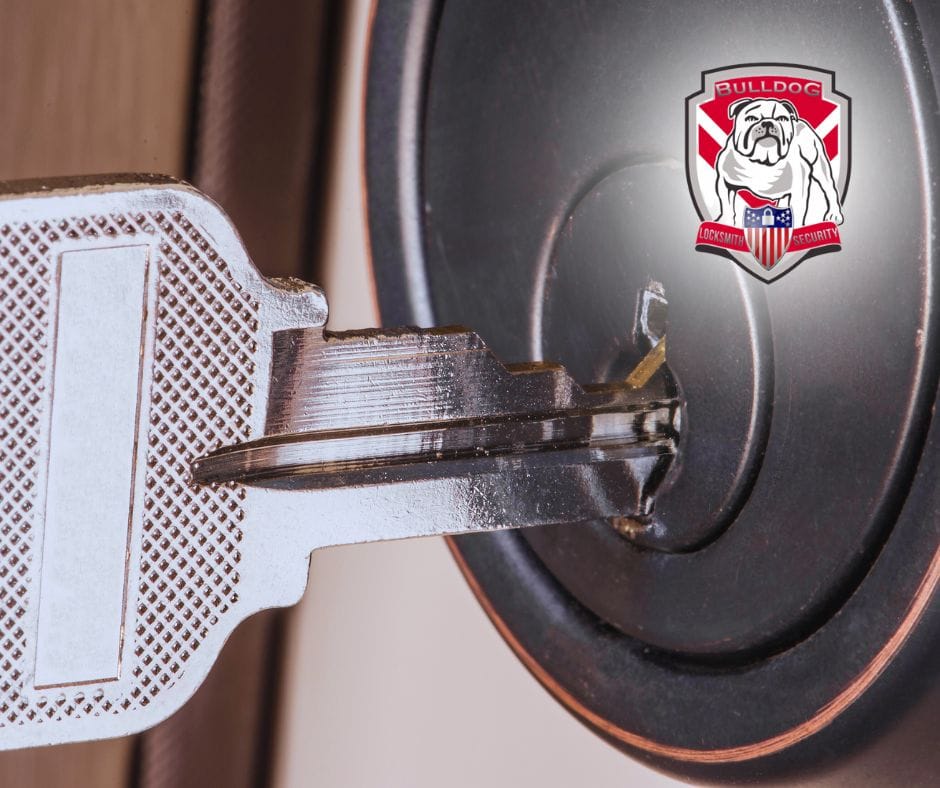
Keys wear down with regular use. Bent, cracked, or heavily worn keys may eventually break inside a commercial lock.
Once a key breaks, the business may need:
- Broken-key extraction
- A replacement key
- Cylinder repair
- Lock replacement
- Emergency lock assistance
- Rekeying if key control has been compromised
Employees should be instructed not to use damaged keys. Replacing a worn key is generally simpler and less expensive than extracting it from a jammed cylinder.
Loose Hardware Can Damage the Door
Commercial handles, levers, cylinders, and strike plates can gradually loosen. If fasteners are not tightened correctly, the hardware may move each time the door is used.
Loose components can cause:
- Misalignment
- Enlarged mounting holes
- Damage to the door surface
- Worn internal connections
- Unreliable latching
- Reduced resistance to forced entry
- Complete hardware separation
Regular inspection allows loose components to be secured before they damage the door or frame.
Door Closers Affect Lock Performance
A door closer controls how quickly and firmly a commercial door shuts. If it is improperly adjusted, the entrance may slam or stop before the latch engages.
A door that repeatedly slams can damage:
- Locks
- Latches
- Strike plates
- Hinges
- Frames
- Glass panels
- Electronic locking hardware
A door that closes too gently may fail to latch, leaving the property unsecured. When a lock develops recurring problems, the closer should be evaluated as part of the complete entrance.
Poor Maintenance Can Weaken Commercial Security
Effective commercial security depends on more than owning expensive locks. Hardware must operate reliably every time the business opens, closes, or restricts access to a sensitive area.
Neglected locks may create security weaknesses such as:
- Deadbolts that do not extend fully
- Loose cylinders
- Damaged strikes
- Doors that fail to close
- Shared keys that cannot be accounted for
- Former employees retaining access
- Keypads using outdated codes
- Electronic credentials that were never removed
Routine maintenance should include both physical hardware and access-management procedures.
Rekeying May Be Needed When Key Control Is Lost
Commercial lock maintenance should also include reviewing who has keys. Businesses may issue keys to employees, managers, cleaners, vendors, maintenance personnel, and temporary contractors.
Over time, it can become difficult to know where every copy is located. A professional lock rekeying service may be appropriate when:
- An employee leaves without returning a key
- A key is lost or stolen
- Contractors no longer need access
- Management changes
- The property changes tenants
- Unauthorized duplication is suspected
- Key records are incomplete
Rekeying changes the internal configuration of compatible locks so old keys no longer work. It can restore key control without replacing functional hardware.
Neglected Access Control Creates Digital Security Gaps
Businesses using electronic access control must maintain more than the physical locks. User credentials, schedules, batteries, readers, software, controllers, and emergency systems all require attention.
Without proper management, a business may accidentally allow access to:
- Former employees
- Expired contractors
- Temporary users
- Lost cards or fobs
- Accounts that should have been disabled
- Individuals entering outside approved hours
Professional access control services may include reviewing users, testing readers, checking electronic locks, verifying backup power, and confirming that credentials operate as intended.
Digital access should be reviewed regularly, especially after staffing or management changes.
Maintenance Helps Prevent Electronic Lock Failure
Keypad locks, smart locks, and electronic access systems can fail due to depleted batteries, loose connections, software issues, or mechanical resistance.
Warning signs include:
- Delayed unlocking
- Inconsistent keypad response
- Frequent low-battery alerts
- The motor sounding strained
- Users needing several attempts
- Access cards working intermittently
- A door failing to lock automatically
- The system losing connection repeatedly
A misaligned door can place excessive strain on an electronic lock’s motor. Changing batteries may temporarily improve performance without correcting the mechanical problem.
A professional inspection helps determine whether the failure involves the hardware, door alignment, power source, programming, or access-control system.
Emergency Repairs Usually Cost More Than Planned Maintenance
Ignoring warning signs can turn a manageable appointment into an urgent service request. Emergency lock assistance may involve after-hours work, immediate travel, temporary security measures, or replacement hardware that was not included in the business’s maintenance budget.
Emergency service may be necessary when:
- The business cannot open
- Employees are locked inside or outside
- A key breaks in the entrance
- The main door cannot be secured
- Access control stops working
- A lock fails after normal business hours
- A break-in damages the hardware
- A restricted room cannot be locked
Emergency service is important when a failure occurs, but preventive maintenance can reduce the likelihood of avoidable emergencies.
Lock Failure Can Interrupt Daily Operations
The direct cost of repair is only one consequence of neglected locks. Businesses may also experience indirect losses.
A malfunctioning entrance can cause:
- Lost sales
- Delayed employee shifts
- Missed appointments
- Customer frustration
- Restricted access to supplies
- Delayed deliveries
- Security personnel expenses
- Management time spent resolving the problem
- Temporary closure of part of the property
For businesses operating under tight schedules, even a short disruption can be costly.
Automotive Locksmith Needs Can Also Affect a Business
Commercial operations often depend on company cars, vans, service vehicles, and delivery trucks. Lost vehicle keys or malfunctioning fobs can delay employees and prevent scheduled work.
An automotive locksmith service may assist with:
- Company-vehicle lockouts
- Lost car keys
- Key replacement
- Key fob programming
- Transponder keys
- Broken-key extraction
- Ignition-key problems
- Duplicate vehicle keys
Businesses should keep organized records of vehicle keys and maintain secure duplicates. Waiting until the only key is lost may result in greater downtime and replacement costs.
What Commercial Lock Maintenance Should Include
A maintenance visit may include:
- Inspecting locks, cylinders, latches, and deadbolts.
- Checking door and strike alignment.
- Tightening loose hardware.
- Testing keys for excessive wear.
- Examining hinges and door closers.
- Applying a suitable lubricant when appropriate.
- Testing keypad and smart-lock functions.
- Checking batteries and power supplies.
- Reviewing key or credential control.
- Identifying hardware that needs repair or replacement.
The scope should reflect the property’s size, traffic level, lock types, and security requirements.
How Often Should Commercial Locks Be Inspected?
There is no single schedule that works for every business. High-traffic entrances generally need more frequent attention than doors that are rarely used.
Consider professional inspection:
- At least annually for general commercial entrances
- More frequently for high-traffic doors
- After an attempted break-in
- When employees report sticking or looseness
- After significant staffing changes
- When keys are lost
- Before seasonal periods of increased activity
- When access-control components behave inconsistently
Employees and managers should also perform simple visual checks between professional service visits.
Warning Signs That a Lock Needs Service
Contact a locksmith when you notice:
- A key sticking or becoming difficult to turn
- Loose handles or cylinders
- A latch that does not engage
- A deadbolt that stops before fully extending
- A door that needs to be lifted or pushed
- Grinding, clicking, or scraping sounds
- Visible rust or corrosion
- A keypad that responds slowly
- An electronic lock that works intermittently
- Repeated business lockouts
- Difficulty securing the building at closing time
Early service can prevent a minor issue from becoming an emergency.
Why Professional Maintenance Is Better Than Quick Fixes
Employees may attempt to address lock problems using household lubricants, excessive force, improvised tools, or temporary adjustments. These methods can make the damage worse.
Professional maintenance provides:
- Accurate diagnosis
- Suitable tools and materials
- Proper lock and strike alignment
- Identification of damaged components
- Testing of mechanical and electronic functions
- Recommendations based on the door’s usage
- Documentation of completed work
- A plan for future repairs or upgrades
A trusted locksmith service in Irving can distinguish between a lock that needs a minor adjustment and hardware that should be replaced.
Create a Commercial Lock Maintenance Plan
A basic maintenance plan can help a business respond to problems consistently.
The plan should include:
- A list of exterior and restricted-area locks
- The type and age of each lock
- Key and credential records
- Dates of previous inspections
- Reported problems and completed repairs
- Battery-replacement schedules
- Procedures for departing employees
- Emergency locksmith contact information
- Planned security upgrades
- Responsibility for reporting door problems
Keeping these records makes it easier to identify recurring failures and budget for necessary improvements.
Commercial Lock Maintenance in Irving, TX
Ignoring lock problems can result in unexpected repair costs, security weaknesses, lockouts, and interruptions to daily business. Routine lock maintenance allows worn or misaligned components to be corrected before they fail completely.
Bulldog Locksmith provides commercial locksmith services in Irving, Texas, including lock maintenance, professional lock installation, lock rekeying, business lockout assistance, emergency service, and access-control solutions.
Contact Bulldog Locksmith to schedule a commercial lock inspection. Preventive service can help protect your property, employees, inventory, and business operations.
Frequently Asked Questions
How often should commercial locks receive maintenance?
General commercial entrances should be inspected at least annually, while high-traffic doors may require more frequent service. Locks should also be checked whenever sticking, looseness, or unreliable operation appears.
What are the first signs that a commercial lock is failing?
Common warning signs include difficulty turning the key, loose hardware, misalignment, grinding sounds, incomplete latching, and electronic locks responding inconsistently.
Can regular maintenance prevent a business lockout?
Maintenance cannot prevent every lockout, but it can identify worn keys, loose hardware, weak batteries, and alignment problems before they cause sudden failure.
Should a business rekey or replace its locks?
Rekeying may be sufficient when the hardware is functional but key control has been lost. Replacement may be necessary when locks are damaged, severely worn, or no longer meet the business’s security requirements.
Does access control require regular maintenance?
Yes. Businesses should review active users, remove outdated credentials, test readers and locks, check power supplies, and confirm that emergency functions operate correctly.
When is emergency lock assistance necessary?
Urgent assistance may be needed when a business cannot open, a door cannot be secured, a key breaks inside a lock, access control fails, or an entrance is damaged during a break-in.
Don’t wait until a security issue disrupts your business. Whether you’re looking to install a high security lock system, upgrade to access control, implement a master key system, or improve your overall business security, Bulldog Locksmith is here to help. Our experienced team provides professional commercial locksmith services, emergency assistance, lock installation, rekeying, and customized security solutions for businesses throughout Grand Prairie and the surrounding DFW area.
Contact us today at (682) 717-2064, visit www.bulldoglocksmith.com, or stop by our office at 445 N. Briery Rd., Irving, TX 75061 to schedule a consultation and discover how we can help keep your business secure.