
Choosing between traditional keys and access control systems is an important decision for any business. Traditional locks are familiar, affordable, and easy to operate, while electronic access solutions provide centralized management, individual credentials, activity records, and greater flexibility. The better option depends on the property’s size, security risks, number of users, and daily operations.
Bulldog Locksmith provides commercial locksmith and access-control solutions for businesses in Irving, Texas. Understanding the benefits and limitations of each system can help business owners select the right approach to protecting employees, customers, inventory, equipment, and confidential information.
What Are Traditional Key Systems?
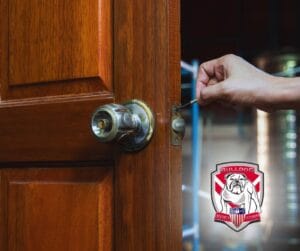
Traditional lock systems use mechanical keys to operate cylinders installed in doors, gates, cabinets, and other secured areas. They remain widely used because they are simple and do not depend on electricity, software, or internet access.
Common traditional commercial lock options include:
- Deadbolts
- Mortise locks
- Commercial lever locks
- Storefront locks
- High-security cylinders
- Interchangeable-core locks
- Master key systems
- Restricted-key systems
Mechanical locks can provide reliable security when the hardware is properly selected, professionally installed, and regularly maintained.
What Are Access Control Systems?
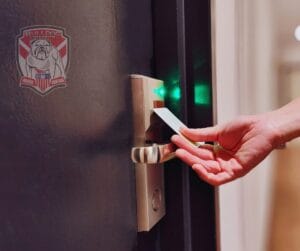
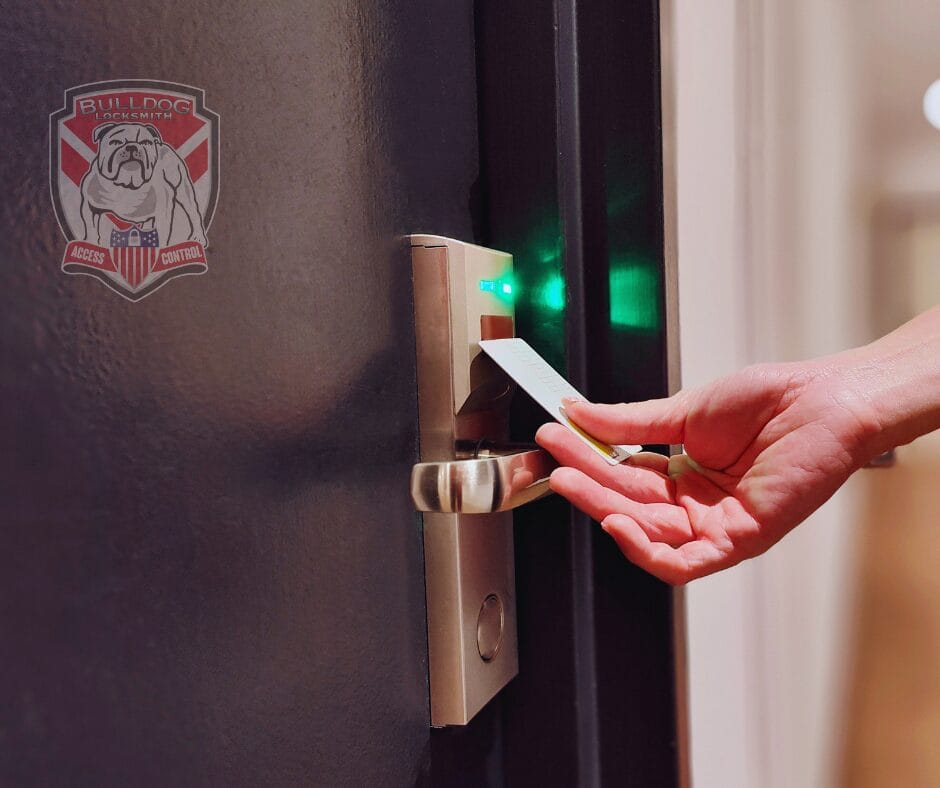
Access control systems use electronic credentials instead of—or in addition to—traditional keys. Authorized users may enter through a code, card, key fob, mobile device, or biometric credential.
A complete system may include:
- Electronic locks
- Keypad readers
- Card or fob readers
- Door controllers
- Power supplies
- Management software
- Request-to-exit devices
- Door-position sensors
- Backup power
- Credential databases
Unlike a standalone smart lock or keypad, an integrated access-control system can manage several doors and many users from a centralized platform.
Traditional Keys Are Familiar and Easy to Use
One of the strongest advantages of traditional keys is their simplicity. Most employees already understand how they work, and businesses do not need to train users on applications, access cards, or electronic systems.
Mechanical locks also:
- Work without electricity
- Do not require network connectivity
- Have no batteries to replace
- Can be serviced by a commercial locksmith
- Are available for many types of doors
- May cost less initially
- Can remain reliable for years with proper care
For a small business with only a few employees and entrances, a traditional key system may provide all the necessary security.
Traditional Keys Can Be Difficult to Control
The main weakness of traditional keys is key management. Once a key is issued, the business may have limited control over how it is used or whether it is copied.
Key-control problems may arise when:
- An employee loses a key
- A former employee does not return it
- Unauthorized duplicates are created
- Contractors retain access after completing work
- Managers cannot determine who entered a room
- Key-distribution records become outdated
- One master key provides access to too many areas
If a key is lost or stolen, the business may need a lock rekeying service to prevent the missing key from working. When several doors use the same key, the project can become more extensive.
Access Control Makes User Management Easier
Electronic systems allow administrators to add, change, or remove credentials without replacing locks or collecting physical keys.
Depending on the system, administrators may be able to:
- Add new employees
- Deactivate former employees
- Issue temporary credentials
- Set access schedules
- Restrict entry to certain doors
- Review access activity
- Respond to lost cards or fobs
- Manage several locations
- Receive alerts
- Lock or unlock designated entrances
This flexibility makes access control systems particularly useful for businesses with many employees, multiple departments, frequent staff changes, or restricted areas.
Access Records Improve Accountability
Traditional keys generally do not record who used them. Electronic systems may create an audit trail showing which credential was presented, at which door, and at what time.
Entry records can help businesses:
- Investigate unusual activity
- Review access to restricted rooms
- Verify employee entry times
- Identify repeated denied-access attempts
- Monitor activity outside normal hours
- Support internal security procedures
An access record does not necessarily prove which individual physically entered, since credentials can be shared. Businesses should require employees to protect their cards, codes, and mobile credentials.
Comparing the Cost of Each System
Traditional locks generally have a lower initial cost. The business pays for the locks, lock installation, keys, and any master-key planning.
However, ongoing expenses may include:
- Duplicating keys
- Replacing lost keys
- Rekeying locks
- Managing master keys
- Responding to business lockouts
- Replacing worn hardware
Access control usually has a higher initial cost because it may require electronic locks, readers, controllers, wiring, power supplies, software, and professional setup.
Ongoing costs may include:
- Credential replacement
- Software or service fees
- Battery replacement
- System maintenance
- Hardware upgrades
- Technical support
Access control may provide better long-term value for businesses that frequently add and remove users. Traditional keys may remain more economical for small properties with stable access needs.
Which Option Provides Better Security?
Neither system is automatically more secure in every situation. Security depends on how the system is designed, installed, managed, and maintained.
A traditional lock can provide strong protection when it includes:
- Commercial-grade hardware
- A secure strike
- A reinforced frame
- Controlled key duplication
- A well-designed master-key structure
- Regular lock maintenance
An access-control system can improve security through:
- Individual credentials
- Immediate credential deactivation
- Time-based restrictions
- Activity records
- Centralized management
- Integration with alarms or surveillance
However, electronic technology cannot compensate for a damaged door, weak frame, or poorly installed lock. Every entrance requires appropriate physical hardware.
Master Key Systems Offer a Middle Ground
A master key system allows different keys to open selected groups of doors. For example, an employee may receive access to an office and common entrance, while a manager’s key opens those doors plus storage and administrative areas.
Benefits include:
- Fewer keys for managers
- Defined access levels
- Simple mechanical operation
- No need for power or software
- Compatibility with many commercial locks
The system must be planned carefully. A lost master key may affect several doors, and unauthorized duplication can weaken security.
Businesses choosing traditional locks should maintain detailed records of issued keys and consider restricted keyways when stronger duplication control is required.
Keypad Locks Provide Keyless Entry Without a Large System
A keypad lock may offer a useful compromise between physical keys and fully integrated access control. Users enter a numeric code rather than carrying a key or card.
A standalone keypad can offer:
- Keyless entry
- Multiple user codes on compatible models
- Temporary codes
- Reduced dependence on keys
- Simple installation on suitable doors
- Lower complexity than a networked system
The business must still manage codes carefully. Shared codes can be passed to unauthorized individuals, and frequently used buttons may show visible wear.
Businesses should use unique codes whenever possible and delete them immediately when access is no longer needed.
Smart Locks for Small Commercial Properties
A commercial-compatible smart lock may offer app management, mobile credentials, access schedules, and activity notifications without the infrastructure of a building-wide system.
A smart lock may work well for:
- Small offices
- Management rooms
- Storage areas
- Shared workspaces
- Rental offices
- Low-traffic employee entrances
Before installation, confirm that the lock is suitable for commercial traffic and compatible with the door. Residential smart locks may not provide the durability required for busy business entrances.
What Happens When an Employee Leaves?
Employee departures highlight one of the biggest differences between traditional keys and access control.
With a mechanical system, the business should retrieve the employee’s keys. If a key is missing or may have been copied, the affected locks may need rekeying.
With access control, an administrator can usually deactivate the employee’s credential. Other employees can continue using their existing cards, codes, or mobile access.
For businesses with frequent turnover, electronic credential management can save time and reduce repeated rekeying expenses.
Which System Is Better During a Power Failure?
Traditional locks continue to operate without electricity. This makes them simple and dependable during outages.
Electronic systems may use different locking configurations and backup-power options. Their behavior during a power failure depends on the hardware and system design.
Before installation, businesses should understand:
- Which doors remain locked
- Which doors release
- How employees exit
- Whether backup power is available
- How authorized users enter
- Whether a mechanical override is included
- How emergency personnel gain access
Professional access control services should include planning for power failures and emergency operation.
Both Systems Require Maintenance
Traditional locks require periodic inspection, cleaning, alignment, and appropriate lubrication. Electronic access systems require these mechanical checks along with software, power, and credential maintenance.
Routine service may involve:
- Testing locks and latches
- Inspecting strike alignment
- Tightening loose hardware
- Checking doors and hinges
- Replacing weak batteries
- Testing backup power
- Reviewing authorized users
- Removing outdated credentials
- Installing approved updates
- Testing mechanical override keys
Neglecting maintenance can result in security gaps, unreliable access, and unexpected repair expenses.
How Each System Handles a Business Lockout
A business lockout can occur with either mechanical or electronic security.
Traditional lockout causes include:
- Lost keys
- Broken keys
- Jammed cylinders
- Worn hardware
- Misaligned doors
Electronic lockout causes include:
- Depleted batteries
- Failed readers
- Disabled credentials
- Programming errors
- Power interruptions
- Network or controller problems
- Mechanical lock failure
Professional emergency lock assistance can restore authorized access and determine whether the issue requires adjustment, repair, rekeying, programming, or replacement.
Can Businesses Use Both?
Yes. Many commercial properties use a combination of mechanical locks and electronic access.
A hybrid system may include:
- Access control at employee entrances
- Traditional keys for utility rooms
- Keypad locks on interior offices
- Smart locks on low-traffic restricted areas
- Mechanical backup keys
- A master key system for authorized management
Combining technologies can balance convenience, cost, and security. The system should be planned carefully so emergency access and key control remain manageable.
Questions to Ask Before Choosing
Before selecting traditional keys or access control, consider:
- How many people require access?
- How often do employees join or leave?
- How many doors need to be managed?
- Are access records necessary?
- Should users have different permissions?
- Is remote management important?
- What is the available installation budget?
- Can the business support ongoing system maintenance?
- Are there areas containing sensitive information or valuable inventory?
- What should happen during a power or network failure?
- Are existing doors and frames in good condition?
- Will several business locations need centralized management?
The answers can help determine whether the business needs traditional locks, access control, or a hybrid approach.
Traditional Keys May Be Better When:
Traditional locks may be appropriate when:
- The property has only a few doors
- Few employees need keys
- Staff turnover is low
- Access records are unnecessary
- The business wants minimal technology
- The installation budget is limited
- Reliable offline operation is a priority
A trusted locksmith service in Irving can design a master-key or restricted-key system that provides better organization than unrelated individual locks.
Access Control May Be Better When:
Electronic access may be appropriate when:
- Many employees require entry
- Access levels vary by department
- Staff turnover is frequent
- Entry records are important
- Temporary access is regularly issued
- The property has several restricted areas
- Credentials need to be removed quickly
- Managers want centralized control
- Access schedules are required
- Multiple entrances or locations must be managed
Professional design ensures that the system supports the business rather than creating unnecessary complexity.
Access Control Services in Irving, TX
The choice between traditional keys and access control systems depends on the size, operations, budget, and security needs of the business. Traditional locks offer simplicity and affordability, while access control provides greater flexibility, accountability, and centralized management.
Bulldog Locksmith provides commercial locksmith services in Irving, Texas, including professional lock installation, lock maintenance, rekeying, master-key systems, keypad locks, access-control solutions, business lockout service, and emergency assistance.
Contact Bulldog Locksmith to schedule a commercial security evaluation and determine whether traditional keys, access control, or a combination of both is best for your Irving property.
Frequently Asked Questions
Are access control systems more secure than traditional keys?
Access control can improve security by providing individual credentials, access schedules, activity records, and quick credential deactivation. However, overall security also depends on the locks, doors, frames, installation, and management practices.
Are traditional keys still suitable for businesses?
Yes. Traditional keys can be practical for small businesses with few doors, limited users, and stable staffing. A master-key or restricted-key system can provide greater control.
What happens to access control during a power outage?
The system’s behavior depends on the locks, power configuration, and emergency design. Backup power or mechanical override access may be available. These procedures should be established during installation.
Can access control prevent business lockouts?
Access control can reduce lockouts caused by lost keys, but failures may still occur because of power, credential, reader, software, or mechanical problems.
Is access control expensive to maintain?
Costs depend on the system’s size and complexity. Maintenance may include software support, credential replacement, battery service, hardware repairs, and system updates.
Can a business use access control and traditional keys together?
Yes. Many businesses use access control on primary or restricted entrances while keeping traditional locks on utility rooms, storage spaces, and lower-risk areas.
Don’t wait until a security issue disrupts your business. Whether you’re looking to install a high security lock system, upgrade to access control, implement a master key system, or improve your overall business security, Bulldog Locksmith is here to help. Our experienced team provides professional commercial locksmith services, emergency assistance, lock installation, rekeying, and customized security solutions for businesses throughout Grand Prairie and the surrounding DFW area.
Contact us today at (682) 717-2064, visit www.bulldoglocksmith.com, or stop by our office at 445 N. Briery Rd., Irving, TX 75061 to schedule a consultation and discover how we can help keep your business secure.