

A professionally designed master key system can help a growing business simplify access, improve key control, and reduce the number of keys carried by authorized employees. Instead of giving every manager a large key ring, the system creates access levels that allow each key to open only the doors assigned to its user.
For growing businesses in Irving, Texas, master keying can support expansion without sacrificing business security. However, the system must be planned carefully. Poor key control, unnecessary master access, or inaccurate records can create security risks instead of solving them.
What Is a Master Key System?
A master key system is a group of compatible mechanical locks organized into an access hierarchy. Each door has its own lock, but certain keys are designed to operate more than one lock.
A basic system may include:
- Change keys: Open one lock or a small group of designated locks
- Master keys: Open multiple locks within a department, floor, or building
- Grand master keys: Open several master-key groups
- Great grand master keys: Used in larger systems with multiple buildings or divisions
Most small and growing businesses need only a simple hierarchy. Adding more levels than necessary can make the system difficult to manage and increase the consequences of a lost high-level key.
How a Master Key System Works
The lock cylinders are configured so that different authorized keys can operate them. For example:
- An employee key opens the main entrance and one office
- A department manager’s key opens all doors in that department
- A facilities key opens maintenance and utility areas
- An owner’s master key opens most authorized doors
- Sensitive rooms remain outside the general system
A commercial locksmith designs the system around job responsibilities, restricted areas, and anticipated business growth.
The goal is controlled convenience—not universal access for everyone.
1. Employees Carry Fewer Keys
As a business adds offices, storage rooms, departments, and entrances, managers may accumulate several keys. Large key rings are difficult to label, distribute, replace, and audit.
A master key may allow an authorized manager to carry one key instead of separate keys for:
- Exterior entrances
- Department offices
- Supply rooms
- Conference rooms
- Storage areas
- Utility rooms
- Shared spaces
Reducing the number of keys can make daily access easier while limiting lower-level users to the areas required for their roles.
2. Access Can Be Organized by Job Responsibility
A growing company may have employees with very different access needs. A master key system creates structured permissions without giving every employee the same key.
Possible access groups include:
- General employees
- Department supervisors
- Executives
- Human-resources staff
- Information-technology personnel
- Cleaning teams
- Maintenance personnel
- Property managers
- Approved contractors
Employees should receive only the access required for their work. This approach supports business security and reduces unnecessary exposure to confidential files, equipment, inventory, or restricted rooms.
3. Opening and Closing Procedures Become Easier
Businesses often designate certain managers to open or close the property. Without master keying, these employees may need several keys and spend time identifying the correct one at each door.
A properly planned system can streamline access for authorized opening and closing staff. This may help reduce:
- Delays at the beginning of a shift
- Confusion caused by similar keys
- Misplaced individual door keys
- Unnecessary duplication
- Dependence on one employee with a complete key ring
The company should still maintain backup access procedures in case the assigned key holder is unavailable.
4. Master Keying Can Support Business Growth
The system can be planned with future expansion in mind. When a business adds offices, departments, or storage rooms, compatible locks may be incorporated into the existing hierarchy.
Future planning may account for:
- Additional doors
- New departments
- A larger management team
- Restricted inventory
- Shared office areas
- New facilities
- Changes in employee roles
Expansion capacity should be discussed before the initial lock installation. A system designed without room for growth may require extensive changes later.
5. Controlled Keys Can Reduce Unauthorized Duplication
A basic key stamped “Do Not Duplicate” does not necessarily prevent someone from obtaining a copy. Businesses seeking stronger key control may choose a restricted or controlled keyway.
Depending on the system, duplicate keys may require:
- Written authorization
- An approved signature
- A registered account
- Identification
- An authorized locksmith or distributor
- A protected key blank
Restricted key control can improve accountability, but it does not prevent a legitimate key from being lost, stolen, loaned, or photographed. Physical records and employee policies remain important.
6. The System Can Simplify Employee Turnover
Employee turnover creates key-management challenges. A growing business must know which keys were issued, what each key opens, and whether all keys were returned.
A master-key plan should include records for:
- Key identification numbers
- Assigned employees
- Access level
- Issue dates
- Return dates
- Lost-key reports
- Replacement history
- Authorized duplicate requests
When an employee leaves, the company should collect the key and review whether rekeying is necessary. The appropriate response depends on the key’s access level and the likelihood that another copy exists.
Losing a master key is more serious than losing a key that opens one office.
7. Emergency Access Becomes More Manageable
Authorized managers may need to enter offices, storage areas, or utility spaces during an operational emergency. A properly controlled master key can provide access without searching for several individual keys.
Potential situations include:
- A water leak
- An electrical concern
- A failed interior lock
- An equipment problem
- A security incident
- A misplaced department key
This does not replace emergency lockout assistance. If a key breaks, a lock fails, or a door cannot be secured, a professional locksmith may still be required.
Master keys should not be stored in obvious or publicly accessible locations.
8. A Master Key System Can Reduce Business Lockouts
A business lockout can interrupt employee schedules, customer appointments, deliveries, and opening procedures. Controlled backup access may reduce certain lockouts caused by unavailable department keys.
However, a master key cannot prevent lockouts caused by:
- Broken keys
- Failed cylinders
- Door misalignment
- Damaged latches
- Jammed exit hardware
- Electronic-lock failure
- Lost master keys
- Keys left inside restricted areas
Businesses should combine key planning with routine lock repair and maintenance.
9. Master Keying Can Work With Smart Locks
Businesses do not always need to choose between mechanical master keys and electronic access. A hybrid system may use mechanical locks on certain doors and a smart lock or access-control device where credentials change frequently.
For example:
- Mechanical master keys for private offices
- Smart locks for shared employee entrances
- Keypad locks for supply rooms
- Electronic access for server rooms
- Mechanical override keys for designated emergencies
The best combination depends on door traffic, security requirements, administration, power availability, and budget.
10. Master Key Systems and Access Control Serve Different Needs
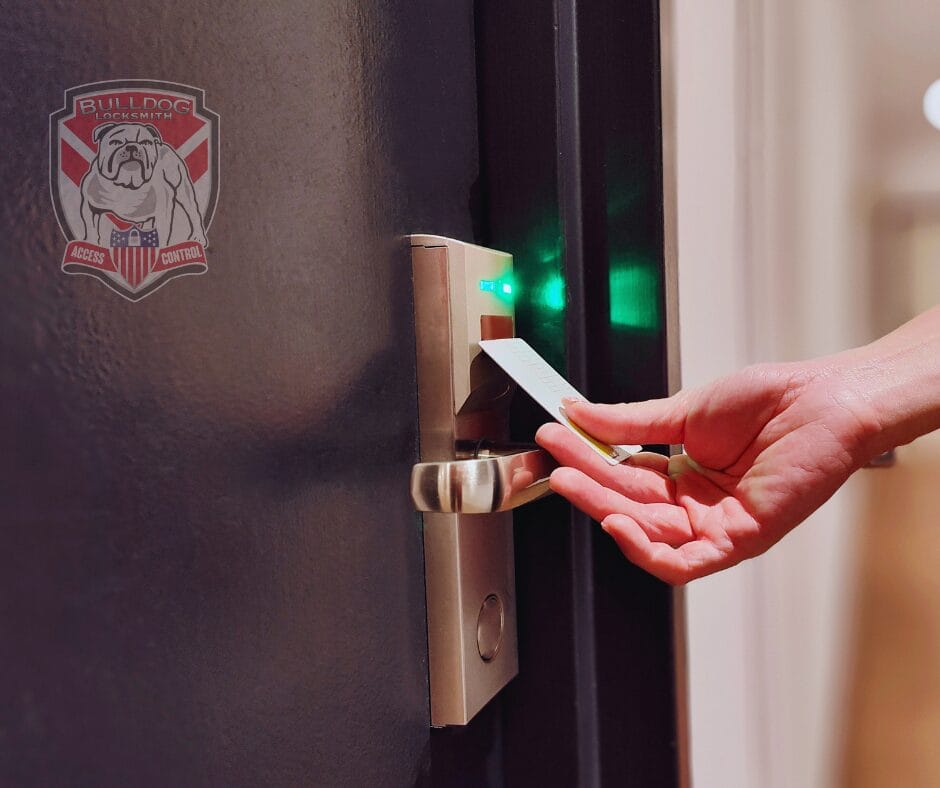
An access control system uses electronic credentials such as cards, fobs, PINs, or mobile devices. A master key system uses mechanical keys.
| Feature | Master key system | Access control system |
|---|---|---|
| Primary credential | Mechanical key | Card, fob, PIN, or mobile credential |
| Power required | No | Usually yes |
| Immediate credential removal | No | Often available |
| Activity records | No | Often available |
| Ongoing administration | Key records | Software and credential management |
| Lost credential response | Rekeying may be needed | Credential may be disabled |
| Upfront complexity | Generally lower | Generally higher |
| Emergency mechanical access | Built into the system | Often requires separate planning |
A master key system may be appropriate for a small or stable office. Access control can be more useful when employees change frequently or management needs scheduling and activity records.
Some businesses benefit from both.
11. Sensitive Areas Can Remain Restricted
A master key does not need to open every door. High-risk areas can remain outside the general hierarchy or use a separate security system.
These areas may include:
- Server rooms
- Human-resources offices
- Executive records
- Cash-handling areas
- Medication storage
- Inventory rooms
- Network closets
- Equipment rooms
The business owner should decide who truly needs access before the system is designed. Adding restrictions later may require rekeying or hardware changes.
12. Master Keying Can Standardize Door Hardware
Growing businesses sometimes accumulate different locks from multiple manufacturers. This may make key management, maintenance, and replacement more difficult.
Professional master-key lock installation may help standardize compatible cylinders and keyways. Standardization can simplify:
- Key duplication
- Lock replacement
- Employee access
- Maintenance
- Recordkeeping
- Future expansion
Standardizing does not mean every door needs identical hardware. Exterior entrances, offices, emergency exits, and specialized rooms may require different lock functions.
Potential Risks of a Master Key System
Master keying improves convenience, but it concentrates access. A lost master key may affect many doors.
Potential risks include:
- Excessive access given to too many users
- Incomplete key records
- Unauthorized duplication
- Lost high-level keys
- Keys labeled with door locations
- Former employees retaining keys
- Too many hierarchy levels
- Unsecured backup keys
- Failure to rekey after a serious loss
These risks can be reduced through careful design and disciplined key-management policies.
How to Protect Master Keys
Businesses should establish written rules for master-level credentials.
Best practices include:
- Issue master keys only when necessary
- Number keys without revealing their access
- Keep accurate issuance records
- Require signatures for receipt and return
- Store backups in a secure location
- Report missing keys immediately
- Prohibit unauthorized duplication
- Review access after role changes
- Audit keys periodically
- Rekey affected doors when risk justifies it
Do not leave a master key in an unlocked desk, general key cabinet, shared vehicle, or another easily accessible location.
What Happens When a Master Key Is Lost?
The business should respond promptly by determining:
- Who lost the key
- Which doors it opens
- Where it may have been lost
- Whether it can be connected to the property
- Whether unauthorized duplication is possible
- Whether electronic or physical access logs provide useful information
- Which doors require immediate attention
A commercial locksmith can assess whether affected locks should be rekeyed. The response may range from monitoring and administrative changes to urgent rekeying of multiple doors.
Emergency service may be appropriate when the key is stolen, clearly identifiable, or connected to an immediate security concern.
When Lock Repair Is Needed
Master keying will not solve a mechanical problem. A lock may still require repair if:
- The key sticks
- The cylinder feels loose
- The latch fails
- The deadbolt does not extend fully
- The door must be pushed or lifted
- The key works only intermittently
- The lock shows corrosion
- The hardware has impact damage
Door alignment should also be checked. Replacing or rekeying the cylinder will not correct a sagging door or damaged frame.
What Happens During Master Key System Installation?
A professional installation may include:
- Reviewing every relevant door
- Identifying employee and management roles
- Defining restricted areas
- Creating the access hierarchy
- Selecting compatible locks or cylinders
- Establishing future expansion needs
- Rekeying or replacing hardware
- Cutting authorized keys
- Labeling keys using a controlled system
- Testing each key and door
- Creating issuance records
- Explaining procedures for lost keys and employee turnover
The company should keep system records secure. Detailed master-key charts should not be displayed publicly or shared unnecessarily.
Questions to Ask a Commercial Locksmith
Before approving the system, ask:
- How many access levels do we actually need?
- Which employees should receive master access?
- Can sensitive rooms remain outside the system?
- Is the keyway restricted or controlled?
- How are duplicate keys authorized?
- Can the system expand later?
- Which existing locks can be reused?
- What happens if a master key is lost?
- Would smart locks or access control suit certain doors better?
- What maintenance and warranty coverage are included?
A professional locksmith should recommend the simplest system that meets the business’s real access needs.
Is a Master Key System Right for Your Business?
Master keying may be a good option when:
- Managers carry too many keys
- Departments need different access
- The company is adding new rooms or employees
- Key records are difficult to manage
- Opening and closing procedures are inefficient
- Several compatible locks need rekeying
- The business needs controlled backup access
Another solution may be better when:
- Employee turnover is extremely frequent
- Immediate credential removal is essential
- Detailed access records are required
- Access schedules change constantly
- The business needs remote administration
In those situations, an access control system—or a hybrid of electronic and mechanical security—may provide more flexibility.
Professional Master Key Services in Irving
A carefully planned master key system can help a growing company simplify access, reduce key clutter, organize permissions, and prepare for future expansion. Its effectiveness depends on appropriate hierarchy, compatible hardware, accurate records, and strict control of master-level keys.
Bulldog Locksmith provides commercial locksmith services in Irving, Texas, including master key systems, lock installation, lock repair, business lockout service, emergency lockout assistance, smart-lock solutions, and access-control systems. Contact Bulldog Locksmith to evaluate your doors and create an access plan suited to your growing business.
Contact us today at (682) 717-2064, visit www.bulldoglocksmith.com, or stop by our office at 445 N. Briery Rd., Irving, TX 75061 to schedule a consultation and discover how we can help keep your business secure.
Frequently Asked Questions
What is the difference between a master key and a regular key?
A regular change key opens one lock or a designated group of locks. A master key opens multiple compatible locks within its assigned level of the system.
Can existing business locks be converted to a master key system?
Many compatible cylinders can be rekeyed into a master key system. Damaged, incompatible, or outdated hardware may require replacement.
Is a master key system secure?
It can provide effective access control when professionally designed and carefully managed. Security depends on limiting master keys, maintaining records, controlling duplication, and responding to lost keys.
What happens if a master key is lost?
The business should determine which doors are affected and contact a commercial locksmith. Rekeying may be recommended based on the key’s access level and the risk of unauthorized use.
Is an access control system better than a master key system?
Neither is always better. Master keys offer dependable mechanical access without power, while access control can provide immediate credential removal, schedules, and activity records.
Can master keys work alongside smart locks?
Yes. Some businesses use mechanical master keys for certain doors and smart locks or electronic access control for high-traffic or frequently changing access points.