

Commercial properties face security risks that ordinary residential-grade hardware may not be designed to handle. Offices, retail stores, warehouses, clinics, restaurants, and other businesses often have numerous authorized users, high-traffic entrances, valuable equipment, sensitive records, and areas that require restricted access.
Professionally selected high-security locks can strengthen vulnerable entry points, improve key control, and make unauthorized entry more difficult. However, the lock is only one part of the door system. Proper installation, compatible doors and frames, controlled credentials, routine maintenance, and an organized access plan are all necessary for effective commercial security.
What Are High-Security Locks?
The term “high-security lock” generally refers to commercial locking hardware designed to offer greater resistance, durability, and key control than basic locksets. Features differ among manufacturers and product lines, so not every lock marketed as high-security provides the same level of protection.
Depending on the product, high-security hardware may include:
- Reinforced lock bodies
- Hardened components
- Restricted or controlled keyways
- Patented key systems
- Resistance to drilling and physical manipulation
- Stronger cylinders
- Durable commercial-grade construction
- Protection against unauthorized key duplication
- Master-key compatibility
- Electronic credential options
- Audit and access-management capabilities
A professional commercial locksmith can help determine which features are relevant to the property rather than choosing hardware based only on a security label.
Why Commercial Properties Need Stronger Lock Protection
Commercial entrances often receive much more use than residential doors. Employees, customers, vendors, cleaners, delivery drivers, contractors, and managers may operate the same hardware every day.
Businesses may also need to protect:
- Cash and payment areas
- Inventory
- Offices
- Customer information
- Medical or personnel records
- Computers and servers
- Tools and equipment
- Utility rooms
- Storage areas
- Loading zones
- Restricted employee spaces
Basic hardware may not provide sufficient durability or access management for these conditions. Correctly selected high-security locks can provide a stronger foundation for the property’s overall security plan.
1. High-Security Locks Improve Resistance to Forced Entry
One important function of commercial security hardware is resisting physical attack. A standard lock may be vulnerable if the cylinder, bolt, strike plate, door, or frame is weak.
Depending on their construction and rating, high-security products may offer greater resistance to:
- Drilling
- Prying
- Cutting
- Pulling
- Wrenching
- Cylinder attacks
- Repeated impact
- Forced rotation
- Heavy commercial use
No lock can make a property completely intrusion-proof. Its performance also depends on the surrounding door assembly. A strong cylinder installed in a weak door or damaged frame may not provide meaningful protection.
Professional lock installation should evaluate the lock, strike, hinges, door material, frame, fasteners, and closing mechanism as one system.
2. Restricted Keyways Improve Key Control
Uncontrolled key duplication is a major concern for businesses. A standard key may be copied without management’s knowledge, making it difficult to determine how many usable keys exist.
Restricted or controlled key systems may limit duplication through designated authorization procedures. Depending on the system, replacement keys may require:
- Verification from an authorized person
- Documentation
- A registered account
- Access to specialized key blanks
- Service through an approved provider
Improved key control can help businesses manage access when employees, vendors, or contractors need physical keys.
However, restricted keyways do not eliminate the need for proper records. Management should document:
- Who received each key
- Which doors it operates
- When it was issued
- Whether it was returned
- Who can authorize duplication
- When locks or cylinders were rekeyed
3. High-Security Locks Support Master-Key Systems
A master-key system can provide different levels of access within one commercial property. For example, an employee key may open only a department entrance, while a manager’s key opens several related areas.
A properly planned system may include:
- Individual door keys
- Department keys
- Manager-level keys
- Building master keys
- Restricted maintenance access
- Separate credentials for sensitive rooms
This structure can reduce the number of keys carried by authorized personnel while maintaining access boundaries.
Master keys require careful control because a lost high-level key may affect many doors. Businesses should limit distribution, document every issue, and have a response plan for missing credentials.
A commercial locksmith can design the hierarchy around the organization’s actual roles and security requirements.
4. Durable Hardware Supports High-Traffic Doors
Commercial locks may be operated hundreds of times per day. Hardware that is not suited to this traffic can loosen, wear, or fail prematurely.
High-quality commercial locks are generally designed with factors such as these in mind:
- Frequent operation
- Heavier doors
- Repeated employee use
- Delivery traffic
- Customer entrances
- Outdoor exposure
- Door-closer pressure
- Compatibility with commercial frames
- Long-term serviceability
Durability is important not only for security but also for business continuity. A failed lock can prevent staff from opening the property or leave an entrance unable to secure.
Routine inspection and timely lock repair can help prevent an unexpected business lockout.
5. High-Security Locks Can Protect Restricted Areas
Commercial properties often need several levels of protection. The front entrance may be accessible to customers during business hours, while offices, storage rooms, and server areas require continuous restriction.
High-security locking solutions may be appropriate for:
- Inventory rooms
- Cash offices
- Records storage
- Medication areas
- Server rooms
- Management offices
- Equipment storage
- Utility areas
- Loading entrances
- Employee-only rooms
The correct hardware depends on who needs access, how frequently the door is used, whether activity records are required, and how the door must operate during an emergency.
6. They Can Work With Access Control
Mechanical high-security locks and electronic access control do not have to be competing options. Many businesses use both as part of a layered security plan.
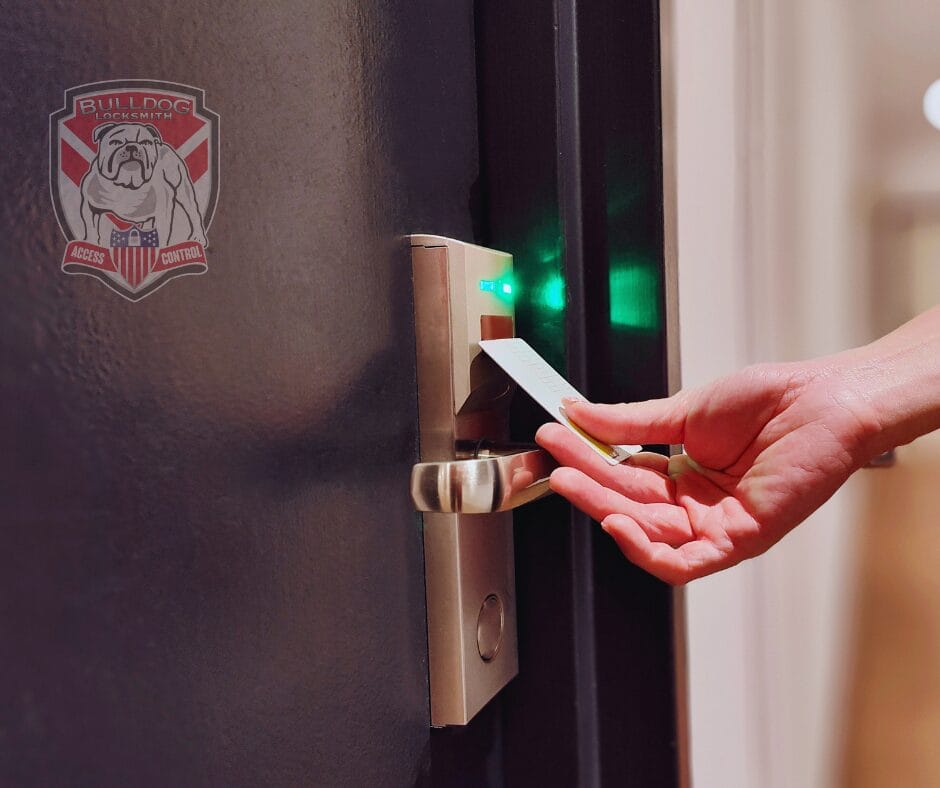
Mechanical locks may protect selected doors or provide authorized backup access, while electronic systems manage routine entry through:
- Key cards
- Fobs
- Keypad codes
- Mobile credentials
- Biometric credentials
- Scheduled permissions
Potential access-control benefits include:
- Individual user identification
- Faster removal of former employees
- Door-specific permissions
- Time-based access
- Temporary credentials
- Reduced distribution of physical keys
- Access activity records
- Centralized management
The mechanical and electronic components must be compatible with the door, frame, exit hardware, fire rating, traffic level, and applicable safety requirements.
7. Smart-Lock Systems Offer Flexible Credential Management
A commercial smart lock system may allow managers to add or remove users without changing a mechanical cylinder. Depending on the product, the system may support remote administration, scheduled access, mobile credentials, or activity reporting.
Smart systems can be useful for businesses with:
- Frequent employee turnover
- Multiple shifts
- Temporary contractors
- Cleaning crews
- After-hours employees
- Several restricted rooms
- Changing access schedules
- Multiple managed locations
However, a smart lock system requires planning for:
- Battery or power failure
- Network interruptions
- Software updates
- Administrator permissions
- Credential security
- Product support
- Emergency access
- Mechanical backup
- Cybersecurity practices
A consumer smart lock may not be suitable for a high-traffic commercial door. The hardware should match the door type and operating environment.
8. High-Security Locks Can Reduce Unauthorized Key Use
A missing traditional key creates uncertainty because management may not know who possesses it or whether duplicates were made.
High-security key systems can improve accountability by creating controlled issuance and duplication procedures. Electronic credentials can provide additional flexibility because a lost card or fob may be disabled without changing every lock.
Effective credential management should include:
- Assigning keys or credentials to specific users
- Recording each issuance
- Limiting high-level access
- Removing access promptly when employment ends
- Investigating lost keys immediately
- Reviewing permissions regularly
- Avoiding shared administrator codes
- Protecting master keys and programming credentials
The lock itself cannot compensate for poor access procedures. Technology and management practices must work together.
9. High-Security Hardware May Deter Opportunistic Entry
Visible commercial-grade hardware may discourage some attempts by signaling that the door has been intentionally secured. However, appearance should never be treated as proof of protection.
The actual performance depends on:
- Hardware construction
- Product rating
- Installation quality
- Door strength
- Frame condition
- Strike reinforcement
- Hinge security
- Glass placement
- Key control
- Maintenance
A professional security assessment should examine the entire entry point rather than assuming an expensive cylinder solves every vulnerability.
10. Upgraded Locks Can Reduce Operational Disruptions
Security problems affect more than property protection. Failed locks and uncontrolled credentials can disrupt normal business operations.
Possible consequences include:
- Employees unable to open the building
- Delayed customer service
- Missed deliveries
- Doors that cannot secure at closing
- Managers traveling to provide keys
- Emergency locksmith expenses
- Replacement of damaged doors
- Concern about former employees’ access
Durable hardware, organized credentials, and preventive maintenance can reduce these disruptions. Businesses should still maintain a plan for contacting an emergency locksmith when authorized access or door security fails unexpectedly.
High-Security Locks vs. Standard Commercial Locks
Not every commercial door requires the same level of protection.
| Feature | Standard commercial lock | High-security lock |
|---|---|---|
| Primary purpose | General commercial access | Enhanced protection and key control |
| Key duplication | May be widely available | May use restricted authorization |
| Physical resistance | Varies by grade and design | Often includes reinforced protections |
| Master-key options | Often available | Available with greater key-control options |
| Electronic integration | Depends on product | Often available in compatible systems |
| Cost | Generally lower | Generally higher |
| Best use | General offices and routine doors | Sensitive, high-value, or exposed areas |
A standard commercial lock may be appropriate for some interior doors. High-security hardware may provide greater value at exterior entrances, restricted areas, or locations where uncontrolled key duplication is a serious concern.
High-Security Locks vs. Access Control
Mechanical high-security locks and electronic access control solve related but different problems.
High-Security Mechanical Locks
These may be suitable when the business wants:
- Strong mechanical protection
- Controlled key duplication
- A familiar key-based system
- Limited electronic maintenance
- Reliable operation without network dependence
Electronic Access Control
This may be appropriate when the business needs:
- Individual credentials
- Fast user removal
- Access schedules
- Activity records
- Temporary access
- Central management
- Different permissions for different doors
Many properties use both. A commercial locksmith can help determine where mechanical locks, electronic access, or a combined approach is most practical.
The Importance of Professional Lock Installation
Even advanced hardware can perform poorly if installed incorrectly. Misalignment can create excess pressure on the latch or bolt, while incorrect preparation may weaken the door.
Professional lock installation should account for:
- Door material
- Door thickness
- Frame condition
- Hardware preparation
- Backset
- Cylinder compatibility
- Strike alignment
- Bolt clearance
- Hinge condition
- Door closer operation
- Exit requirements
- Fire rating
- Traffic level
- Weather exposure
Installation should also consider how employees will enter and how occupants will exit safely. Security improvements must not interfere with applicable life-safety or emergency-egress requirements.
Why the Door and Frame Matter
A high-security cylinder installed in a damaged door is an incomplete upgrade. The surrounding structure should be strong enough to support the hardware.
A commercial locksmith may check:
- Cracks around the lock preparation
- Loose hinges
- Damaged frame material
- Worn strike openings
- Inadequate fasteners
- Door warping
- Misalignment
- Deteriorated closers
- Excessive gaps
- Evidence of previous forced entry
The door may require adjustment, reinforcement, repair, or replacement before new hardware is installed.
When High-Security Locks Need Repair
High-security hardware still requires maintenance. Dirt, misalignment, worn keys, loose fasteners, heavy traffic, and attempted entry can affect performance.
Signs that lock repair may be needed include:
- Increasing key resistance
- A loose cylinder
- A latch that does not retract
- A deadbolt that fails to extend fully
- Grinding or scraping
- Intermittent electronic operation
- Visible impact damage
- Unusual battery drain
- A door that must be pushed or lifted
- Repeated credential errors
Do not force a key or continue operating damaged hardware. Early service may prevent broken keys, additional damage, or a business lockout.
How to Prevent a Business Lockout
High-security hardware can improve protection, but employees still need clear access procedures.
To reduce the chance of a business lockout:
- Maintain controlled backup credentials
- Replace worn keys
- Remove outdated keys from circulation
- Keep administrator access secure
- Change electronic-lock batteries promptly
- Test backup-entry methods
- Correct sticking doors
- Schedule lock repair when problems begin
- Document who can authorize emergency service
- Keep the contact information of a trusted locksmith
- Review opening and closing responsibilities
- Train managers on credential procedures
The backup plan should remain secure. Spare master keys or administrator credentials should not be left in obvious or broadly accessible locations.
When to Call an Emergency Locksmith
An emergency locksmith may be needed when:
- Authorized employees cannot enter
- A key breaks inside the lock
- A commercial door will not secure
- Electronic credentials stop working
- The lock is damaged during an attempted break-in
- A cylinder fails outside normal service hours
- A former employee refuses to return a key
- A lost key creates an immediate security concern
The provider should verify that the caller has authority to request access or security changes. After restoring entry, the locksmith may recommend repair, rekeying, credential cancellation, or replacement.
Are High-Security Locks Worth the Investment?
High-security hardware may be worthwhile when a business needs improved key control, greater physical resistance, commercial durability, or protection for sensitive areas.
It may be especially valuable for:
- Exterior entrances
- High-value inventory
- Records rooms
- Cash-handling spaces
- Healthcare facilities
- Warehouses
- Server rooms
- Management offices
- Multi-tenant commercial properties
- Businesses with frequent staffing changes
The strongest lock is not always necessary for every interior door. A layered plan can place stronger protection where the risks and potential losses are greatest.
How to Choose the Right High-Security Locks
Before choosing hardware, consider:
- What the room or entrance protects
- The door and frame condition
- Expected daily traffic
- Number of authorized users
- Key-control requirements
- Employee turnover
- Electronic-access needs
- Desired activity records
- Emergency-entry procedures
- Maintenance resources
- Required safety functions
- Budget and expansion plans
Avoid selecting hardware based solely on price or marketing claims. Ask about the product’s commercial grade, key-control process, available certifications, warranty, service requirements, and compatibility with the existing door.
Planning a Commercial Lock Upgrade
A coordinated upgrade may include the following steps:
1. Inspect All Entry Points
Review exterior doors, employee entrances, loading areas, offices, storage rooms, and other controlled spaces.
2. Identify Security Priorities
Rank doors according to exposure, asset value, access frequency, and operational importance.
3. Review Existing Credentials
Determine who has keys, codes, cards, fobs, and administrative access.
4. Select Appropriate Hardware
Choose mechanical locks, access control, or smart systems based on the needs of each door.
5. Correct Door Problems
Repair frames, hinges, closers, and alignment before installing upgraded locks.
6. Complete Professional Installation
Have the hardware installed, configured, and tested by a qualified provider.
7. Train Authorized Users
Explain credential use, reporting procedures, battery maintenance, and emergency access.
8. Schedule Ongoing Maintenance
Inspect high-traffic locks and electronic components before performance declines.
Choosing a Professional Locksmith in Irving, Texas
A commercial security upgrade requires more than replacing one cylinder. The locksmith should understand door construction, commercial hardware, key management, electronic access, and emergency-egress requirements.
When choosing a professional locksmith in Irving, Texas, look for:
- Commercial locksmith experience
- Knowledge of high-security key systems
- Familiarity with access-control hardware
- Clear product and service recommendations
- Professional identification
- Transparent estimates
- Appropriate authorization procedures
- Emergency-service availability
- Support for maintenance and repairs
- Experience with high-traffic commercial doors
The locksmith should explain why a particular product suits the property and what limitations or maintenance requirements it has.
Protect Your Commercial Property With Bulldog Locksmith
Properly selected high-security locks can strengthen commercial entry points, improve control over key duplication, protect restricted rooms, and support a layered business security plan. Their effectiveness depends on appropriate hardware, secure credential management, compatible doors and frames, professional installation, and regular maintenance.
Bulldog Locksmith provides commercial locksmith services in Irving, Texas, including high-security lock installation, lock repair, rekeying, access-control solutions, smart-lock systems, business lockout assistance, and emergency locksmith service.
Whether you need to secure one sensitive room or upgrade multiple commercial entrances, Bulldog Locksmith can evaluate your property and recommend an appropriate combination of mechanical and electronic security.
Contact us today at (682) 717-2064, visit www.bulldoglocksmith.com, or stop by our office at 445 N. Briery Rd., Irving, TX 75061 to schedule a consultation and discover how we can help keep your business secure.
Frequently Asked Questions
What makes a lock high-security?
High-security locks may include reinforced components, controlled or restricted keyways, stronger cylinders, greater resistance to physical attack, and commercial-grade construction. Features vary by product.
Can high-security keys be duplicated?
Some high-security systems restrict duplication through specialized blanks and authorization procedures. The exact process depends on the manufacturer and key system.
Do high-security locks prevent every break-in?
No lock can guarantee that a break-in will never occur. High-security locks can make unauthorized entry more difficult, but the door, frame, hinges, strike, glass, and access procedures must also be secure.
Can high-security locks work with access control?
Yes. Commercial properties can combine mechanical high-security locks with card readers, keypads, fobs, mobile credentials, and other access-control technologies.
Are smart locks considered high-security locks?
Some commercial smart locks include advanced security features, but electronic operation alone does not make a lock high-security. Product construction, certification, installation, credential management, and door compatibility should all be evaluated.
Do high-security locks require maintenance?
Yes. Locks should be inspected for wear, misalignment, damaged keys, loose hardware, dirt, electronic errors, and battery issues. Prompt maintenance can prevent failure and lockouts.
When should a commercial lock be repaired instead of replaced?
Repair may be suitable when damage is limited and the hardware still meets the business’s security needs. Replacement may be better when the lock is badly worn, obsolete, repeatedly failing, or no longer appropriate.
Can high-security locks reduce business lockouts?
Reliable hardware and controlled credentials may reduce some lockouts, but businesses still need backup-entry plans, timely maintenance, and procedures for lost keys or failed electronic access.